Step Into the Bata Shoe Museum

Navigation

  • Main Website
  • Exhibitions
  • Curatorial
  • Collections
  • Conservation
  • Interviews

Take a peek into our nearly 15,000 collection with our blog series, From the Vault! Every other week, we share interesting stories about one of our artefacts.

What is the provenance of this pair? When did they enter the BSM collection?

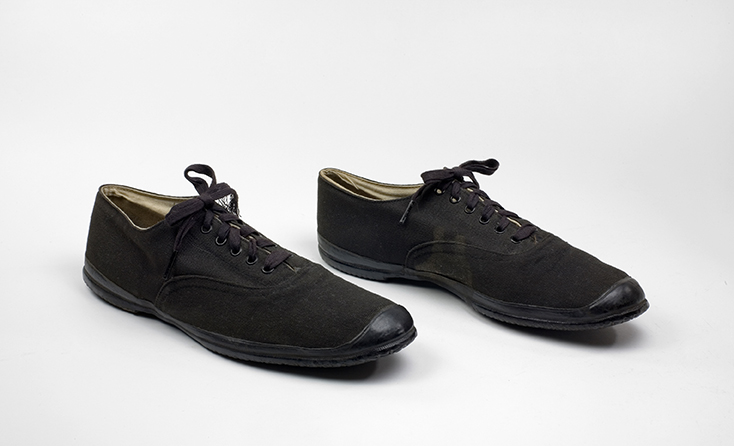
These low-cut, lace-up sneakers would have been worn for a variety of athletic and leisurely pursuits at the end of the 19th century and was purchased for the museum in 1996.
Are there any features that distinguish this artefact from others of the same period and geographical location?

They were made by the Goodyear Rubber Manufacturing Company which was founded in the middle of the century. Although these are simple canvas shoes, they demonstrate a subtle elegance. The attention to detail, which can be seen in touches such as the addition of small decorative leather tabs below the lacing, reflect the fact that the intended clientele was relatively privileged.

Can you elaborate more on this artefact?

Early sneakers were made of canvas with rubber soles that began as costly luxuries with social implications despite their humble appearance. The 19th century was a period of booming industrialization which gave rise to an upwardly mobile middle class and leisure time, long a privilege of the rich, was eagerly pursued as a means of proclaiming newfound status. This, in turn, led to a demand for specialized equipment and clothing designed specifically for these amusements. Enterprising manufacturers began to offer rubber-soled athletic shoes at prices reflecting not only the high cost of rubber but also the financial success of their intended clientele.

In the United States, this increasingly ubiquitous form of footwear came to be called the 'sneaker', in addition to being called a 'tennis shoe' by the 1870s. The term ‘sneak’ was used as early as 1862 in England to refer to rubber galoshes and the fact that rubber soles let one pad around noiselessly. However, it was only in the US that the term sneaker became commonplace to identify rubber-soled athletic footwear by the 1870s.

  • 0 Comments

Take a peek into our 14,000+ collection with our blog series, From the Vault! Every other week, we're sharing interesting stories about one of our artefacts.

What is the provenance of this pair? When did they enter the BSM collection?

These pair of boots, along with five other identical pairs, was purchased for the museum at an auction in Santiago, Chile in 1983. The shoes were part of an estate sale and came from a house that had been untouched for over 100 years. They date to 1875.

Are there any features that distinguish this artefact from others of the same period and geographical location?

These boots were made by the award-winning Parisian shoe manufacturer L.P. Perchellet. How they came to Chile remains unclear. They could have been purchased in Paris and sent to Chile or they may have been imported. The six pairs have their original shoe boxes and are all unworn.

Can you elaborate more on this artefact?

The industrialization of shoemaking in the 19th century made a wide variety of fashionable footwear available to women at many different price points. Women who could afford fine footwear sought out the exquisite boots made by exclusive firms, while those on tighter budgets acquired mass-produced yet still lovely examples such as this pair. Mass production created product consistency and the invention of the sewing machine allowed for footwear to be decorated with embroidery while remaining accessibly priced. Details like tassels, bows and shiny buttons added to their appeal.

  • 0 Comments

Take a peek into our 14,000+ collection with our blog series, From the Vault! Every other week, we're sharing interesting stories about one of our artefacts.

What is the provenance of this pair? When did they enter the BSM collection?

This pair of ceremonial shoes was purchased for the museum by Sonja Bata in Yangon, Myanmar in the late 1990s.

Are there any features that distinguish this artefact from others of the same period and geographical location?

There are many versions of this type of shoe. It is typically worn by boys for the Theravada Buddhist ceremony called shinpyu. Each year, boys who are under 20 years old temporarily enter monasteries for instruction as Buddhist novices. In emulation of the historic Buddha who was a prince before seeking enlightenment, the children are adorned in princely garb, including royal hintha bird shoes, for their journey to the monasteries. Once they arrive at the temple, their clothing and footwear is discarded as a symbol of their readiness to pursue spiritual instruction and leave worldly desires aside.

Can you elaborate more on this artefact?

These shoes are designed to emulate the traditional footwear worn by Burmese royalty. Royal ceremonial footwear was shaped like the golden-feathered hintha bird and was typically adorned with elaborate shwe-chi-doe embroidery which incorporates gold thread, gold sequins, beads and cut glass into its lavish designs. Unlike royal footwear, however, these were designed to be discarded.

  • 0 Comments

Take a peek into our 14,000+ collection with our blog series, From the Vault! Every other week, we're sharing interesting stories about one of our artefacts.

What is the provenance of this pair? When did they enter the BSM collection?

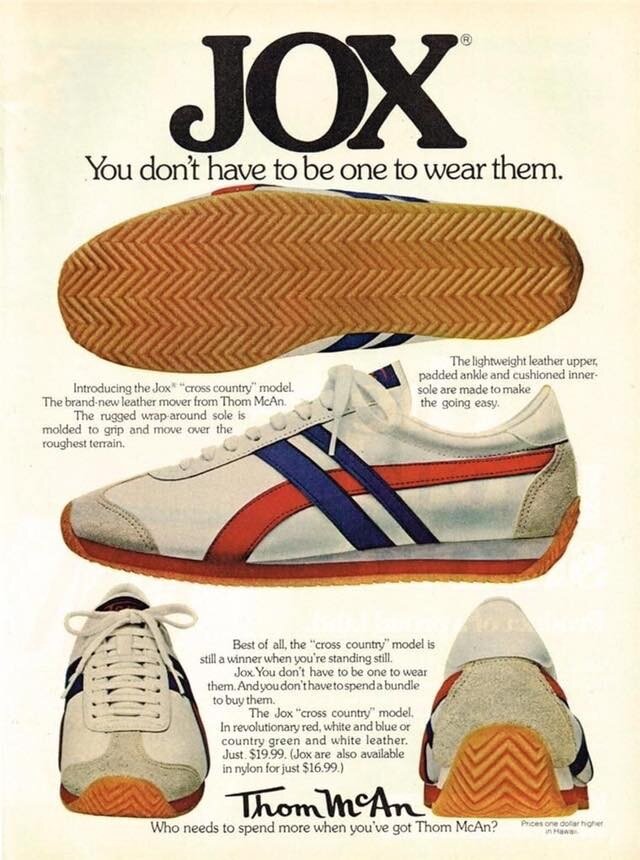
This sample sneaker (c. 1978), the Jox Cross Country, was donated to the museum by footwear industry expert Phillip Nutt in 2013.

Are there any features that distinguish this artefact from others of the same period and geographical location?

The Thom McAn Jox was designed for the North American ‘athleisure’ market. Its' design sought to translate the sensibility of high-end athletic footwear into accessible fashion. An advertisement for the Cross Country from 1976 clearly proclaims this, “Best of all, the “cross country” model is still a winner when you are standing still. Jox. You don’t have to be one to wear them. And you don’t have to spend a bundle to buy them.”


The Jox models offered by Thom McAn were so popular that the brand opened stand-alone athletic retail chain in 1976 called JOX. According to Nutt, by the late 1977s Jox was the second largest shoe brand by sales in the US. The success of this concept spurred the Kinney Group to create Footlocker.

Can you elaborate more on this artefact?

The Cross Country had all the features of high-end athletic footwear including the use of lightweight nylon, suede details, and cushioned tongues and insoles. However, its' principal purpose was to meet the footwear needs of families at affordable prices. It was unisex, available in children’s and adult sizes, and sold for under twenty dollars USD.

  • 0 Comments

Take a peek into our 14,000+ collection with our blog series, From the Vault! Every other week, we're sharing interesting stories about one of our artefacts.

What is the provenance of this object? When did they enter the BSM collection?

This is a ‘pullover’ of Roger Vivier’s design, The Rocket, and was created for Yves Saint Laurent when he was the head of Dior in 1959. It was acquired from Rayne as part of a large group purchase of Vivier pullovers by the museum in 1994.

Are there any features that distinguish this artefact from others of the same period and geographical location?

Roger Vivier was picked by Christian Dior to be the Dior shoemaker in 1953 and Vivier worked for the House of Dior until 1963. The architectural aspects of Vivier’s work was central to Dior’s appreciation of Vivier and equally valued by Saint Laurent when he took over after Dior’s death in 1957. Just as Saint Laurent’s first designs for Dior challenged the fashion world, so did Vivier’s new creations as he introduced strikingly innovative heels and toes with each collection.

Although Vivier’s cutting-edge designs complemented Saint Laurent’s controversial creations, the two did not work side by side. Vivier worked with Saint Laurent in the same way that he had worked with Dior, and he explained the process in a 1958 interview, “I create my models alone quite independently of Dior or Saint Laurent. I do not see the collection until I have completed my shoe designs. When the shoes are ready, Saint Laurent sees the models and selects those which he feels are the most suitable for his collection.” (Celia Benabu, “M. Roger Vivier,” 1958)

The models that Dior and Saint Laurent would have seen were pullovers, such as this one. Pullovers are shoe prototypes that do not yet have soles or often heels. The Vivier pullovers in the collection include notes and pen marks on the designs, indicating changes to be make prior to production.

Can you elaborate more on this artefact?

The Rocket featured a sharply geometric toe that showed little regard for the shape of the human foot. The final design included Vivier’s innovative choc heel as can be seen in this 1959 spread in the French magazine L’Officiel.

To see other Vivier's from our collection, check out our Unboxing the BSM series on our YouTube channel below.

  • 1 Comments

By Elizabeth Semmelhack, Senior Curator

Small, luminous and colourful, beads have been used to decorate footwear around the world for centuries. Historically beads have been crafted from a wide variety of natural sources such as pearls but even in ancient times some of the most desirable beads were made of glass. From the very beginning beads were more than simple decorative objects, they were an integral part of trade. Glass beads were a staple European trade good during the Age of Exploration and their eager embrace by people the Europeans traded with transformed the fashion across the globe. The beaded footwear from North America is a testament to this and to the versatility of beads and the inventiveness of beaders.

Lakota, 1900. Moccasins with upper solidly beaded with white, rose and navy geometrical design on blue background.

Among the most exquisite beaded shoes in the collection are the beaded-soled footwear made by Lakota women in the second half of the 19th century.  Not only are the uppers of these shoes fully beaded but the soles are as well leading some to suggest that they were never intended to be worn.  Some have even suggested that this type of footwear was made exclusively for funerary wear. However, every pair in our collection shows ample evidence of wear both inside the shoe and out establishing a much more celebratory function for these artefacts.  This is corroborated by late 19th century photographic evidence showing men wearing beaded-soled moccasins at important gatherings.  What is inarguable about these shoes is that they were painstakingly crafted labours of love.   Whether decorating a pair of 19th century Lakota shoes or embellishing the uppers of 18th century slippers, beads add a shimmer of colour that never fades and always fascinates.

Here are a sample of other shoes from the BSM collection which use beads as a form of decoration.

Women’s pumps from the late 1700s are a created from a tiny beetle wing. We believe that the shoes which are made from embroidered linen were made in India and worn in England.

Boots such as these were part of the elaborately beaded and symbolically complex royal regalia that proclaimed the status of the oba or king of the Yoruba peoples. Nigeria, 1900.

Elaborately beaded shoes embellished with fresh water pearls. The peacocks on the vamps suggest that they were intended for royal wear as the peacock was an important royal symbol, and the beaded cypress trees symbolize longevity. Persia, mid-19th century. See more about it on our TikTok below.
@batashoemuseum

Off the Shelf: Episode 32✨Featuring a pair of Persian babouche in today’s episode! #m#useum #f#acts

♬ original sound - batashoemuseum
  • 4 Comments

Take a peek into our 14,000+ collection with our blog series, From the Vault! Every other week, we're sharing interesting stories about one of our artefacts.

What is the provenance of this pair? When did they enter the BSM collection?

This pair of mules was acquired by the museum from Christie’s in London in 1998. They had been consigned to Christie’s by Gisela Horsnell.

Are there any features that distinguish this pair from other mules from the same period and geographical location?

The Peranakan Chinese community in Malaysia was established in the 19th century when immigrants from Southern China moved to the Selat Melaka (Strait of Malacca) region. One Han Chinese cultural tradition integrated into this new community was the importance placed on shoes made by wives and daughters, especially those made for marriage. Young brides-to-be created elegant mules with elaborately beaded and embroidered uppers for their prospective grooms and families to assess. Brides also often made the mules that they wore at their weddings. Many of these mules were long kept as treasured family heirlooms.

Can you elaborate more on the materials used to make this pair?

This pair features an upper made using silver-coloured metallic thread brocade and green velvet. The vamp is embellished with the Buddhist swastika in purple and green while the throat line is decorated with embroidered beetles and spiders. Small gold sequins are also used. The mules came with cushioned interior supports for storage and the original cloth in which they were wrapped.

Who would have worn this pair and where or for what occasion?

A bride would have worn this pair at her wedding and most likely would have made them as well.

  • 4 Comments

We have been living with the COVID-19 pandemic for over a year, and much has been written about its impact on global fashions. For those of us who study this field, these past 15 months have offered an amazing opportunity to examine how consumer habits have changed when it comes to footwear, and to start thinking about what footwear fashions might look like once the pandemic has ended.

Unsurprisingly, fashion over the past year and a half has largely centered on comfort and mobility. Athleisure has been a popular trend for several years now, with heeled footwear and formal oxfords giving way to the sneaker as the footwear of choice. The limited mobility that consumers have experienced as a result of pandemic lockdowns has further increased the popularity of footwear that is comfortable and suited to either lounging at home, or participating in outdoor athletic activities. Studies have actually shown that sales of slippers increased dramatically over the past year and according to research by the NPD group, sales of dress shoes dropped as much as 70% during the second quarter of 2020.

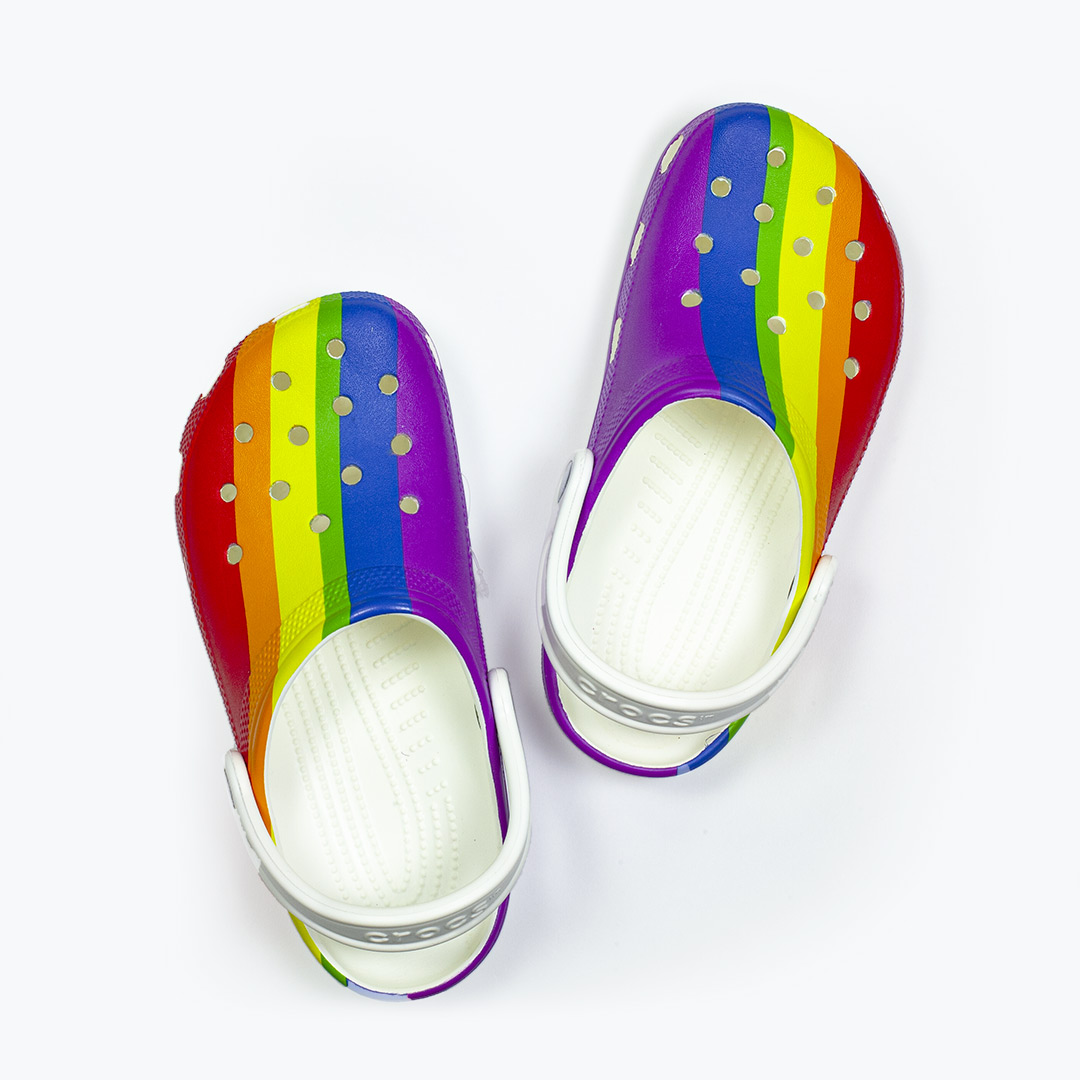
Major brands and luxury fashion houses have begun capitalizing on this market shift towards comfort footwear. For example, Balenciaga released their own line of heeled house slippers for Spring/Summer 2021, in styles that are reminiscent of the ‘boudoir slippers’ that were popular in womenswear in the early to mid 20th century. Crocs, which have been derided for years as unfashionable and ugly, have become increasingly ‘cool’ over the past year. The brand has collaborated with musicians such as Post Malone, Bad Bunny, and Justin Bieber, which led to many commentators referring to 2020 as “the year of the Croc.” Known for their relative affordability, in addition to their incredible comfort, it is not surprising that Crocs are becoming very popular at a time of economic uncertainty.


are many theories about what footwear consumption might look like once the pandemic ends. Some think that the trend for casual and comfortable shoes which began several years ago will continue, while others predict that bold, colourful, and heeled styles will come back into fashion once consumers are able to return to workplaces and social environments.

It has also been theorized that the sustainable fashion movement might get a boost as a result of the pandemic. Some argue that the pandemic has resulted in a renewed appreciation for both the environment and human connection with the result that people will consume less, and wear the fashions they already own. Others have argued the opposite, suggesting that we might experience a phase of increased consumer behavior, and that we might relive the 1920s; a period known for its decadent and glamorous fashion which followed the horrors of the First World War and the 1918 Influenza Pandemic. Historically, periods of extreme socioeconomic change almost always result in larger shifts in culture and consumer behavior, so it will be interesting to see both what styles of footwear come into fashion, and on what scale we will be consuming these fashions in the coming years.

At the moment, we historians are carefully watching the fashion world and the consumer market in order to understand what footwear is popular here and now. At the Bata Shoe Museum, we are also trying to collect examples of footwear that is reflective of this particular cultural moment: if you have any suggestions of footwear that might be appropriate, reach out to us on social media and let us know what we should collect!

  • 1 Comments

Take a peek into our 14,000+ collection with our blog series, From the Vault! Every other week, we're sharing interesting stories about one of our artefacts.

What is the provenance of this pair? When did they enter the BSM collection?

This pair of moccasins was one of four made by Kadohadacho maker Sun-wit Sturm née Longhat, wife of the Jacob J “Doc” Strum, for Virgil Robbins in 1909. They were acquired by the Museum in 1993 from the Richard Pohrt Jr. collection.

Are there any features that distinguish this pair from other moccasins from the same period and geographical location?

The Kadohadacho had their traditional homelands in what is now the United States along the Red and Arkansas River valleys of Texas and Oklahoma. After a series of frustrated negotiations with the Unites States, they were forcibly settled in what became Oklahoma, close to the Lenape and Kickappo nations. This pair, made by Sun-wit Strum, is strikingly similar to Lenape examples in both cut and beadwork and suggests cross-cultural influence.

Can you elaborate more on the materials used to make this pair?

This pair was made of deerskin and embellished with glass beads on the vamp. The collars feature dark blue textile edged in pink silk ribbon decorated with beadwork.

Who would have worn this pair and where or for what occasion?

It is unknown if these moccasins were made as a gift or if they were sold to Virgil Robbins but they were never worn.

  • 1 Comments

At the Bata Shoe Museum, we often use footwear to explore histories of larger cultural concepts such as gender, capitalism, sex, colonialism and race. Often, these complicated stories are not obvious from just looking at the shoes themselves – it is through careful research on the history of the shoes and the contexts in which they were produced and worn which reveals how they are linked to these larger social and political practices. One example includes the ‘nude’ shoe. What colour comes to mind when one describes a ‘nude’ toned shoe? Where did this image come from? And can an analysis of ‘nude’ footwear allow us to raise larger questions about racial inclusivity in fashion?

In fashion, ‘nude’ refers to something that is meant to blend in with one’s skin tone. For decades in the Western fashion system, clothing, lingerie, cosmetics and footwear have been produced in nude shades. However, the range of hues offered have always been extremely limited to shades of pink, peach or beige, much to the frustration of individuals with deeper skin tones.

In the past several years, there has been a push in the fashion world to re-examine what colour(s) are considered ‘nude.’ But why now, when there have been complaints from consumers stretching back decades? This timing is likely due to the fact that there has been a larger cultural movement taking place in recent years which is shining a light on racial inequality and exclusion within the fashion system. Furthermore, social media has given a public platform to frustrated consumers who are emboldened to directly call out brands for the lack of inclusive shade ranges in what they offer. Popular Instagram accounts such as Diet Prada and Estee Laundry are examples of spaces where people have been able to share their frustrations.

In response, some footwear brands such as Stuart Weitzman have begun expanding their range of ‘nude’ shoes in recent years. Not only is there a growing cultural expectation that brands should become more shade inclusive, but also that brands themselves are recognizing that it is profitable from a business perspective to do so. At the same time, independent designers such as Rebecca Allen and Jeneba Barrie, who themselves have personally experienced the frustration of not being able to find nude footwear in their skin tone, have started to produce shoes that fill this market need.

One style of footwear that has received considerable media attention for its limited colour offerings is the ballet slipper. In ballet, the foot is considered an extension of the leg, which means that a dancer’s slippers have to match their skin tone to create a seamless line from leg to toe. Historically, ‘nude’ ballet slippers have been either pink or peach. Even as professional dance companies began to diversify from the 1960s onwards, ballet slippers have remained pink forcing dancers with darker skin tones to dye or ‘pancake’ their ready-made shoes with cosmetics and paints. Ballet dancers go through many pairs of slippers during rehearsals and performances, and dancers of diverse racial backgrounds have had to perform the labor of dyeing their slippers for decades – a labor that their lighter-skinned colleagues have never had to do.

View this post on Instagram

A post shared by @ericunderwood

Very recently, some ballet shoe manufacturers have responded to this need for slippers in more shades. In 2017, Bloch began to produce their ‘Cocoa’ shade ballet slipper. In 2018, the dance company Ballet Black, which celebrates Black and Asian representation in ballet, collaborated with Freed London, one of the largest producers of ballet slippers in the world, to release shade-inclusive ballet slippers in order to address these exclusionary practices.

The concept of ‘the nude shoe’ is one of many examples where we can discuss issues of race and exclusion through footwear. Stay tuned to this blog to learn more in the coming months!

  • 0 Comments

Take a peek into our 14,000+ collection with our blog series, From the Vault! Every other week, we're sharing interesting stories about one of our artefacts.

What is the provenance of this pair? When did they enter the BSM collection?

This pair of riding shoes was collected in 1985 the city Andkhoy in North Central Afghanistan. It was said that they were worn to play polo, the heel securing the foot in the stirrup to increase stability and were identified as part of a buzkachi, or polo player’s outfit.

Are there any features that distinguish this pair from other boots from the same period and geographical location?

This pair of Turkmen riding shoes would have traditionally been worn with soft-soled but sturdy sock called “tent boots” and together these two pieces would have functioned like a one-piece riding boot. The advantage to this two-part system was that the shoes could be left outside the home while the socks could continue to be worn inside.

Can you elaborate more on the materials used to make this pair?

Heeled footwear appears to have been innovated in Western Asia and there were a number of different ways of constructing heels. This pair features heels created by stacking thin layers of leather. The sole leather also extends down the face of the heel creating what is known in the West as a breasted heel. The vamp of the uppers was embellished with a range for materials from silk thread to metal wire.

Who would have worn this pair and where or for what occasion?

This pair of shoes would have been worn by a man for horseback riding and polo playing.

  • 1 Comments

The BSM has footwear made from a variety of materials from diverse peoples around the world. For many of the people living in coastal and riverine communities, locally caught fish is part of their diet. The skin of these fish, referred to as fish leather or fish skin textile, was sometimes used for clothing, including footwear, as it is waterproof, windproof and very strong.

These boots were made by a Nanai artist, in the early 1990s who lived on Sakhalin Island, in southeastern Russia, north of Japan. They were purchased by a curator at the Museum of Ethnology & Anthropology, St. Petersburgh and donated to the BSM in 1997.

All skins used for clothing, no matter the source creature, are tanned using a variety of methods to prevent putrefaction or rotting which is a natural deterioration until someone intervenes. The processes used, depending on the artisan, are as unique as the person preparing the skin. Some people use traditional methods, passed down over thousands of years; some have created new methods, using contemporary materials, that yield the desired result.

These boots were made in the early 1980s by Ainu artist Shigeru Kayano, who lived in Nibutani, Eastern Hokkeido, Japan. They were sewn together from 4 salmon skins.

The process starts by separating the skin from the meat, which is eaten immediately or smoked/cured for storage. Fins are usually trimmed off at this point, however, this step depends on the artist and their final intent. Next, the skin is cleaned of connective tissue and residual fats by scraping with a blunt tool; followed by tanning to preserve the skin. In some instances, urine is used to cure the skin which is then washed to stop its tanning action.

These urine tanned salmon skin boots were made in 1992 by Nunamiut artist and seamstress Eliza Chase from Bethel, Alaska. The contrasting design on the leg was created by using the other side of the skin sewn into the holes made when the fins were removed. The bottom units (soles) of the boots were made from seal skin.

Other techniques use dish detergent, fabric softener, animal brains, eggs or a combination of glycerin and alcohol. The skins are left in solution for several days, although duration can vary based on the type of tanning solution, then rinsed again. Some artisans manipulate the tanned skins until dry, others stretch them out to dry and soften them by hand just before using.

These fish skin boots with contrasting cotton legs and decorative cotton boot liners were made by Nyura Beldi in 1994. She lived in Nayhin village, Khabarovsk territory, southeastern Russian which is an area north of the Chinese border. They were purchased by a curator working at the Textile Museum of Canada and donated to the BSM.

Sometimes the fin holes were filled with a piece of fish leather sewn in place, and sometimes the edges of the holes were gathered together and sewn shut, as in the case of the boots pictured below.

These boots were made in the 1980s by an unknown Yuit artist from Alaska.

You Wenfeng, a Hezhe artist living in China, continues the traditional techniques taught by her mother. You cleans, then dries the salmon skins. Once she has enough for her project, the skins are softened by pressing them between the ‘jaws’ of a large wooden tool carved with tooth-shaped projections.


These salmon skin boots, made by You Wengfeng in 2006, are embellished with marten fur and lined with a quilted pink cotton fabric. The curvilinear cloud designs are cut from fish skin and appliquéd in place.

Joel Isaak is an award winning Dena’ina artist and teacher based in Alaska. He uses a variety of materials, including fish skin, to create his sculptures. In 2013 he designed and made a collection of clothing, which was modeled at the Wear Art Thou fashion show. Pictured below are a pair of salmon skin pumps, a contemporary take using a material that has been part of Indigenous Alaskan culture for millennia.

Ada Hopkins

BSM Conservator

  • 0 Comments

By Creative Director & Senior Curator Elizabeth Semmelhack

We sat down with BSM Creative Director & Senior Curator Elizabeth Semmelhack to ask her a couple of questions about clogs!

To begin, we asked Semmelhack why there is a common thread of wooden footwear in so many diverse cultures. She explained that with the abundance of trees all around the world, it isn’t surprising that wooden footwear can be found in many cultures.  Wood is durable, can be carved or hewn into sculptural shapes and is suitable for wear in wet conditions.  The ancient Romans wore a type of stilted wooden clog in their Roman baths which over the centuries evolved into the high qabâqib worn by women throughout the Middle East until the 20th century for the same purpose.  The Dutch clog, perhaps the most iconic of all wooden footwear, probably came into favour because of the very wet conditions in many parts of the Low Countries.   And of course, the fact that wood is so widely available and thus an accessible material for making inexpensive footwear can’t be overlooked.

So if wood is such an accessible and affordable material for footwear, the next question becomes - why then weren’t clogs or other forms of wooden footwear more universally worn?  According to Semmelhack, necessity may be the mother of all inventions but cultural allegiances often trump what might appear to be common sense.  To illustrate this point, she points to the use of clogs in the New World.  In North America, those areas settled by the English show very little clog use but in Nouvelle France clog-making quickly became an industry.   When asked what might explain the difference, like a true historian, Semmelhack uses an old Protestant Irish toast from the 17th century to King William III to offer some insight.


Here's to the glorious, pious and immortal memory of the great and good King William III, Prince of Orange, who saved us from rogues and roguery, slaves and slavery, knaves and knavery, Popes and Popery, brass money and wooden shoes.

Semmelhack goes on to explain that the wooden shoes refer to the Catholic French who King William III battled on numerous occasions and give us a clue as to just how powerful cultural associations can be in relation to forms of dress.

These meanings, however, are also fluid and change as cultures change. Today the BSM collection has hundreds of child-sized “Lancashire clogs” from Northern England. Lancashire clogs became popular in parts of Northern England during the Industrial Revolution and miniature versions of these clogs seem to have been brought over by people immigrating to Canada as mementos of home. 

Clearly wooden footwear, like all other aspects of dress, is more than simply utilitarian and carries with it cultural associations that has impacted its use and popularity around the world.

Korean Namakshin, 1870-1910

Marken, Netherlands, late 19th century

Shoes with matching wooden clogs. England, 1735-1750

Lancashire clogs. England, 1920
  • 1 Comments

Take a peek into our 14,000+ collection with our blog series, From the Vault! Every other week, we're sharing interesting stories about one of our artefacts.

What is the provenance of this pair? When did they enter the BSM collection?

This single buckle maybe French and dates to the 1730s. They were acquired by the Museum in 2007 from a dealer in 18th century European fashion and textiles.

Are there any features that distinguish this pair from other shoe buckles from the same period and geographical location?

This is a very carefully crafted and delicate D buckle. This type of buckle features an anchor-like prong that slips into an opening similar to a button hole on one of the latchets of a shoe designed to take a D buckle. The other, longer latchet, or strap, feeds through the buckle and is secured with the sharp prong.

Can you elaborate more on the materials used to make this pair?

Like pieces of jewellery, expensive buckles were made out of silver and ornamented with gems, both real and imitation. 18th century taste was for diamonds but high-quality glass paste ‘gems’ were also widely used and accepted in high society.

In the 17th century, Englishman George Ravenscroft discovered that adding lead oxide to molten potash glass increased the clarity and heaviness of glass, making it ideal for faceting into faux gems. By the 18th century, the addition of red lead further increased the clarity of this paste glass as did backing it with metal foil.

Who would have worn this pair and where or for what occasion?

Buckles replaced ribbons as the stylish way to keep shoes on in the middle of the 17th century. Considered scandalous at first, this new fashion took several decades to come to common use. Even famed English diarist Samuel Pepys felt compelled to record on 22 January 1660, “This day I began to put buckles on my shoes.” This buckle, dates to the mid-18th century and was most probably worn by a woman. Its curvilinear shape reflects the influence of the Rococo aesthetic.

  • 0 Comments

Take a peek into our 14,000+ collection with our blog series, From the Vault! Every other week, we're sharing interesting stories about one of our artefacts.

What is the provenance of this pair? When did they enter the BSM collection?

This pair of A:shiwi (Zuni) women’s wedding boots entered the collection in 1980 and was acquired by Mrs. Bata.

Are there any features that distinguish this pair from other boots from the same period and geographical location?

Traditionally, a A:shiwi bridegroom was responsible for making the wedding boots to be worn by his bride.

Can you elaborate more on the materials used to make this pair?

The soles of these boots are made from durable raw hide molded into shape and then dried. The uppers and shafts are made out of white deerskin. Each boot features shafts made using one complete deerskin that wraps around the leg and is held in place by deerskin ties. Wedding boots required that the bridegroom make his stitches invisible to the eye and that he sew the soles to the uppers without turning the boots inside out. This difficult requirement made the creation of wedding boots a true test of skill and devotion.

Who would have worn this pair and where or for what occasion?

The boots would be worn by a new bride.

  • 1 Comments
Older Posts Home

About Us

Discover the treasures of North America's charming and surprising shoe museum.

Follow Us

  • twitter
  • facebook
  • Instagram
  • youtube
  • LinkedIn
  • e-news

recent posts

instagram

COPYRIGHT © 2020 Bata Shoe Museum, Toronto, Canada. All rights reserved.
Powered by Blogger.

Template Created By : ThemeXpose . All Rights Reserved.

Back to top