Wednesday, November 7, 2012

Creating Footwear From Unusual Materials


By Assistant Curator Sarah Beam-Borg

One of our curious correspondents asked recently for some information about footwear made from non-traditional materials and it prompted me to go take a look in our storage rooms for some really intriguing examples – and since our collection has over 13,000 pairs of shoes, it was not tough at all to find these very interesting pieces!


Fishskin as a material for footwear has been used in many places around the world.  The inherent waterproof nature of fishskin makes it an ideal material for footwear worn in inclement weather.  This pair of Amur boots is from the late 20th century and is from Sakhalin Island.


Metal has been used for footwear all over the world since the advent of metalsmithing.  Precious metals like sterling silver however are much rarer because of the cost of the material and relative fragility.  This single silver stirrup would have been used by a Peruvian woman in the 19th century to ride on her horse; only one stirrup is needed for side-saddle style riding so it is not part of a more traditional pair.


These stilted, ivory, hour-glass shaped paduka from the 17th century would have been worn by a man or woman of significant wealth, perhaps even royalty.  Ivory was considered such a precious material in India, that it was reserved for use by holy men and members of the royal family.  The soles of the paduka feature metal hobnails.


Human hair is a truly rare material from which to make any kind of clothing, in fact it is often associated with penitence and martyrdom because it can be very uncomfortable.  This sock made from a combination of human hair, wool and yucca fibre dates to the 13th century and shows signs of use.  It was found in Nitsi Canyon in northern Arizona and is attributed to an Ancestral Puebloan site.


Hollow-core grass and straw stalks provide excellent insulating properties and as materials are used commonly for outdoor winter footwear or as inner liners.  This pair of grass socks with blue thread embroidery were worn in the early part of the 20th century in the Aleutian islands.  Grass socks were commonly worn by Alaskan Aleuts  inside their boots to protect their feet from moisture.


This pair of shoes and matching handbag are recent additions to the Bata Shoe Museum’s fashion collection.  They were donated to the collection by a woman whose boyfriend had picked up the sheets of raw material in the early 1960s while in Taiwan and suggested that she have some shoes made for herself in Hong Kong; they are made from cloth that has been constructed from moth cocoon casings.


The iridescent green sequins that embelish these women’s pumps from the late 1700s are a created from a tiny beetle wing.  The shoes which are made from embroidered linen were made in India and worn in England.

These are just a few examples of the footwear that we have in our collection made from unique and unusual materials.

Wednesday, October 31, 2012

Halloween From the Feet Up!

Here at the Bata shoe Museum we thought that we would try and provide some inspiration from our collection for those of you still struggling to find the perfect Halloween costume.  And of course, we are a bit biased about the most important part of any outfit! We asked our Assistant Curator and Exhibition Manager Sarah Beam-Borg to pick some fun and unique artifacts that will inspire you this Halloween!

This pair of red and green shoes were reportedly worn in the late 20th century by a clown in the Barnum and Bailey circus.  With their exaggerated wide toes and mismatched colours it would be impossible to avoid getting caught up in the clowning mood.


This shoe with it's exotic three dimensional dragon’s heads in multicoloured appliquéd leather.  They were made by British shoe designer Thea Cadabra in 1984 and would turn any wearer into a dragoness.


In the middle of the 19th century, men and women often went to “fancy dress” balls where they would wear elaborate costumes or disguises.  It was not uncommon to embellish pre-existing clothing that had fallen out of fashion and was no longer in use.  This pair of white silk Adelaide boots features beaded domino designs that would have undoubtedly matched her dress.


Tall, thick leather boots like this pair were worn by Postillions who were the coachmen that rode on the horses as guides from the 17th through the 19th centuries throughout Western Europe.  The boots were considered part of the saddle equipment and protected the men’s legs from horses and low-lying branches.


As you can see these grey and yellow shoes with red taillights have been influenced heavily by the design aesthetic prevalent in the American automotive industry in the 1950s.  The possibilities with these shoes are endless and they would look great with a vintage dress.


Dressing up like a glam Rock Star from the 70s is always a popular costume choice for men at Halloween.  This pair of boots was made by boot-maker Master John in 1973 and was worn in Toronto.

Halloween is for kids of all ages but most commonly, the under-twelve set get all the good candy!  This pair of children’s sneakers from 1982 would have been a fun and sensible addition to an Incredible Hulk costume.

We hope that these choices give you the inspiration to create the perfect Halloween costume this year - from your feet up! 

Thursday, October 11, 2012

Socks: Between You and Your Shoes - Part 1

By Senior Curator Elizabeth Semmelhack

Here in Canada the time of year has arrived when we add something to our wardrobes which have been absent for some months - socks! What is cosier than slipping into a pair of hand-knit socks.  But socks are not just for warmth - for thousands of years, people around the world have sought to separate themselves from their shoes with all manner of shoes.  Some are humble, some are splendid, but all were created to make us more comfortable as we walk through life.

Replica of Otzi man's shoe, 2002
When the 5300 year old Otzi man's body was found in the Alps in 1991, not only has his body been preserved but so had his clothing, including his shoes and 'socks'. The socks were really bunches of grass that Otzi had stuffed into a netting made of linden bast.  Dr. Peter Hlavacek, the Czech researcher who had worked on the Otzi mans's shoes, made this replica for himself to see how well the shoes and grass functioned.  After hiking in his replica shoe, Hlavacek said that the grass worked very well as an insulator and wicked moisture away from his feet.  Grass has been used by many different peoples around the world either simply stuffed into their shoes, or intricately woven into socks.


Possibly Spanish , 17th century
Knitting was introduced into Europe by the Moors who rules Spain from the 8th to the 15th centuries.  Finely knit silk stockings became a highly desirable Spanish speciality.  Queen Elizabeth is said to have declared that she would never again wear linen hose after trying on a pair of Spanish silk stockings.  This pair of hand-knit silk stockings is probably Spanish and was made to be worn by a very wealthy child.  The stockings were made using sold threads that had been dyed red, which was the most expensive dye in the 17th century.  The use of silver and gold gilt thread also suggests that the wearer was well off. 

Check back next week as we continue to trace the history of socks!

Tuesday, September 4, 2012

Plastics Blog - Chapter 4 - Who Are You? Plastics Identification

Who Are You: Plastics Identification
By Samantha Conover


Different plastics degrade according to their own particular weaknesses. Some plastics are more vulnerable to light, while others are more vulnerable to moisture. All plastics will eventually degrade, but there are particular plastics that are considered “malignant” or “bad neighbours” because their degradation can actually harm nearby materials. In order to best prevent plastic deterioration, it’s necessary to know what kind of plastics you’re dealing with. 

Plastics can be identified in many ways. The simplest method of identification involves physical cues and knowledge of production dates. For example, rubber tends to have a characteristic smell. Phenol formaldehyde (the plastic used to make the ever-collectible Bakelite) feels heavier and “chunkier” than other plastics. A plastic object that is known to be from the late 19th Century is more likely to be cellulose nitrate than polystyrene because of known production dates (cellulose nitrate started being produced in the 1860s, while polystyrene entered production in the 1930s). The careful observation of physical and historical cues is often all that is needed to successfully identify a plastic. 

This stylish bathing shoe from the 1920s can be identified as rubber because of its flexibility, characteristic smell and production date.
  
Plastics can be more precisely identified through the use of chemical tests. Different tests are used to produce a reaction with a characteristic component of a particular plastic. This reaction usually is visible in the form of a colour change. For example, the test for cellulose nitrate produces a bright blue colour if the result is positive. While these tests offer more accuracy, they require the removal and destruction of a small sample. Scientists have worked to “miniaturize” these tests so that only a very small sample is needed for the reaction to be visible. 

 Photo of cellulose nitrate test  - This bright blue colour indicates that the sample is cellulose nitrate

The most exact method of identifying plastics is through chemical analysis which allows a researcher to obtain the fullest knowledge of a sample’s chemical composition. One popular method of analysis is Fourier Transform Infra-Red Spectroscopy (FTIR). FTIR provides information on a material’s molecular structure and chemical bonds. This is done by measuring a sample’s absorption of infra-red light which is mathematically calculated to produce a graph called a spectrum. An FTIR machine works by beaming a ray of infra-red light at the sample. When the molecules in the sample are exposed to infra-red light they vibrate in a characteristic manner. These vibrations are plotted out on the graph which creates a specific pattern. By comparing this pattern to a reference collection of patterns, a researcher can identify the sample. A fun way to understand this is to imagine that each type of plastic scanned has dance “fingerprint” made up of individual dance moves that distinguishes it from others.

And now… the answer to some of the plastic mysteries I discussed in a previous blog post. It seems my suspicions were right about the shiny lacquer heels! Tests for cellulose nitrate came out positive.  Because cellulose nitrate is potentially dangerous to the collection I am advising that heels of this type should be frequently monitored for any changes. I was wrong about the corrosive beads on the beautiful silk shoe. The beads tested negative for cellulose nitrate, but I’m still unclear on their identity. I suppose it’s good to have a mystery to keep me musing.


It has been an amazing experience working with my favourite material at the Bata Shoe Museum. I love plastic because of its ability to provoke controversy and inability to stay static. To some plastic represents cheap and mass-market manufacture. To others it signifies bold modern design. Plastic seems to languish in landfills while revealing its capacity to disintegrate in museum and gallery storage rooms. It can be a crystal clear acrylic rhinestone heel or flexible faux leather boot. I hope that my blogs have inspired some to look at plastics in a new way that finds appreciation for an often overlooked wonder of the modern world!


Wednesday, August 15, 2012

Capturing the Collection: The Bata Shoe Museum’s Imaging Project


By Nicole Dawkins (Collections Management Assistant- Artifact Handler) and Christine McLean (Collections Management Assistant- Photographer) 

( BSM Image S89.0178)

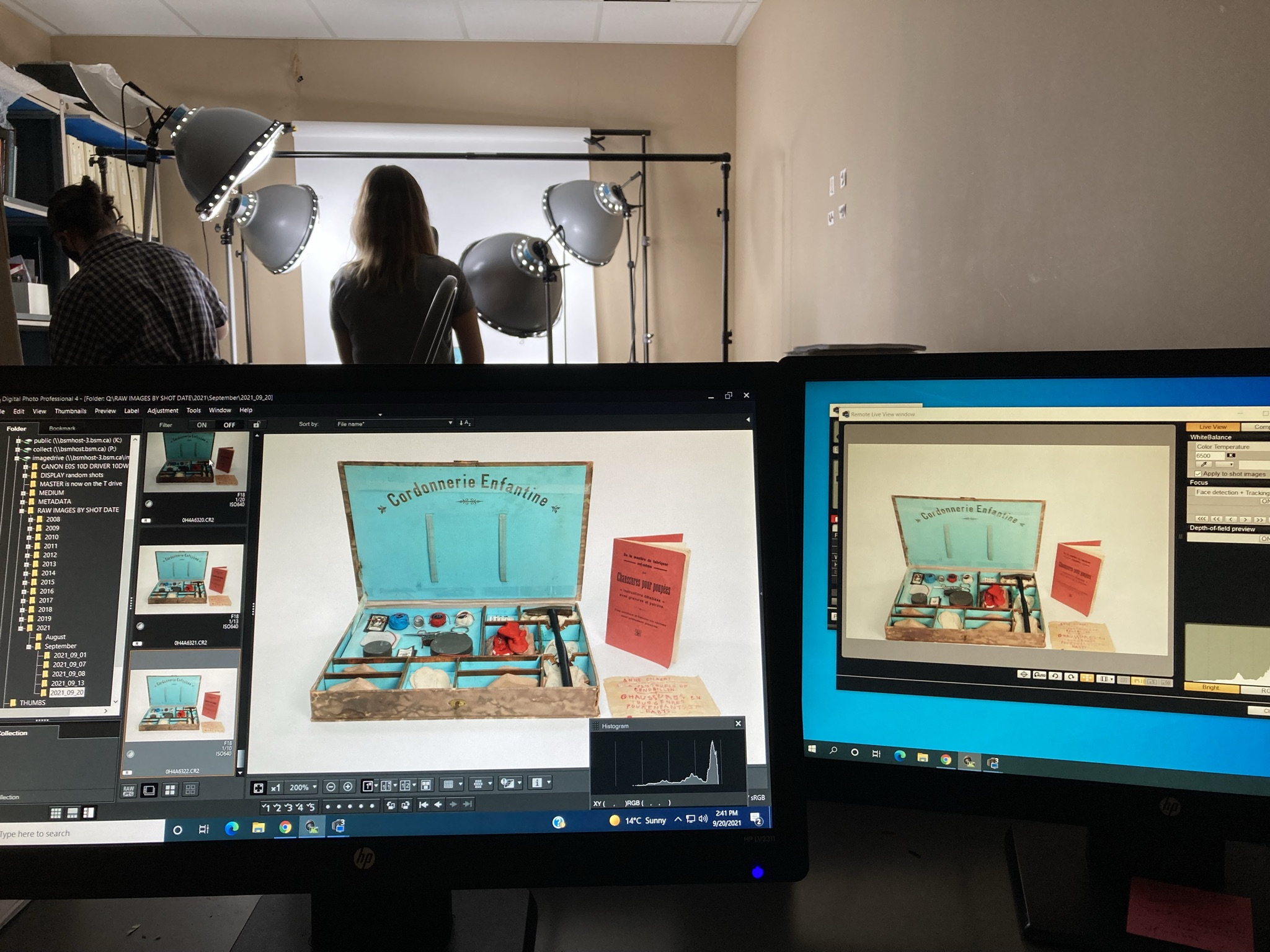
Over the last two and a half months, photographer Christine McLean and I have been working our way through the Bata Museum incredible artefact storage rooms, as part of an ongoing collections management project to photo document the over 12,500 (and growing!) artefacts in the collection.

The colour, digital images we produce will replace out-of-date black and white analog (film) photographs, and will be linked to the artifact records in the museum’s collection database— allowing museum staff and researchers to see and identify the objects without having to visit artifact storage. In the future, these images might also be used in exhibition catalogues, research publications, on the museum website, or even things like calendars and greeting cards.

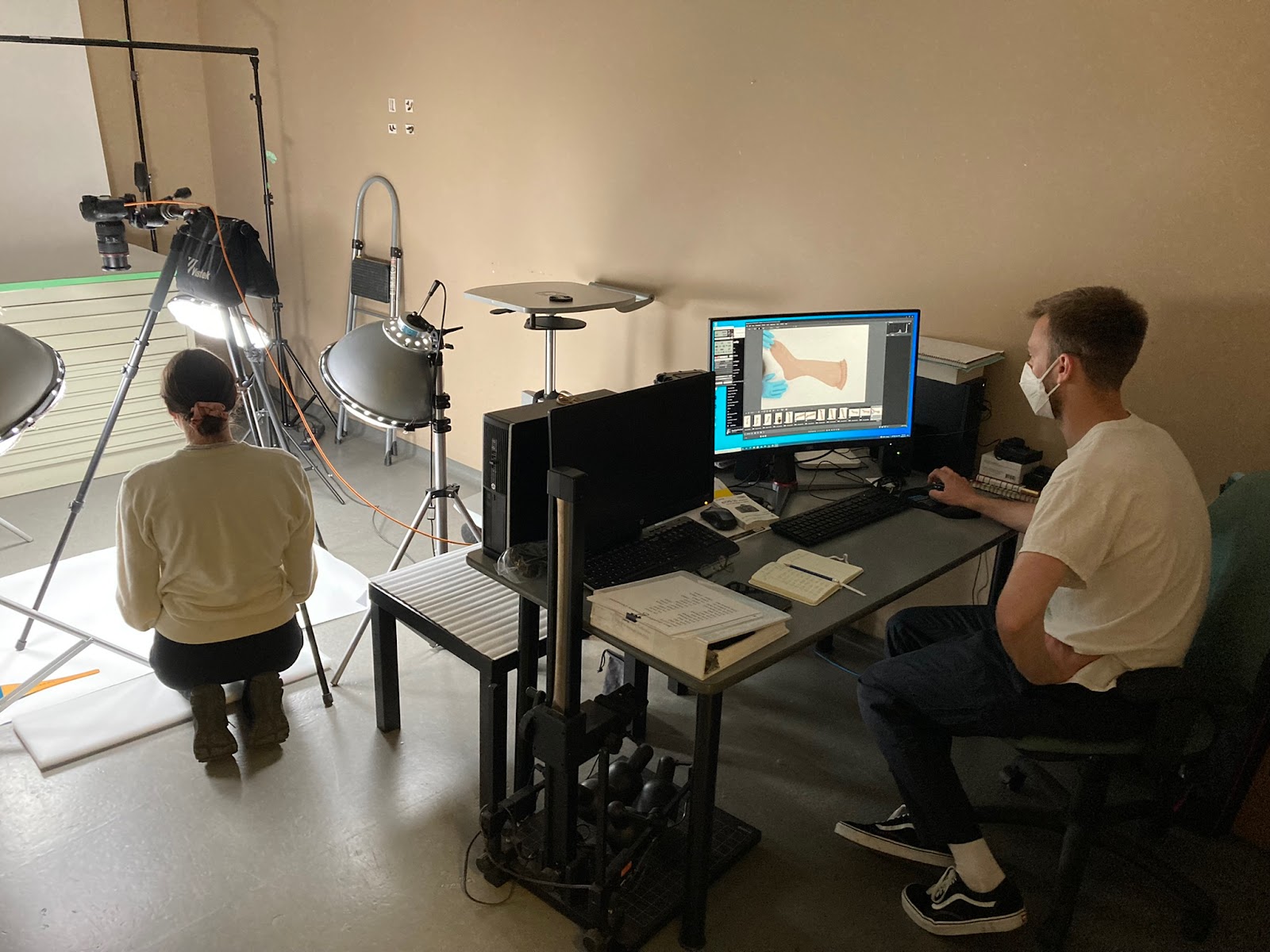
As photographer, Christine has been primarily responsible for lighting, operating the photographic equipment, and producing clear and professional shots. My role has been in carefully transporting, positioning, and preparing the artefacts for photography. This project is also very collaborative— we work together on composing each shot, and share the job of processing the images in Photoshop as well as preparing and managing the image metadata to be uploaded to the database. Christine and I have also had the opportunity to switch roles and try our hands at object handling and photography, respectively. (Christine was pretty excited to finally be able to touch the objects we are shooting!).

Sole shot of black silk lotus shoe with elaborately embroidered sole featuring fish, lotus flowers, roots, and seed pods. (BSM Image P02.0017)

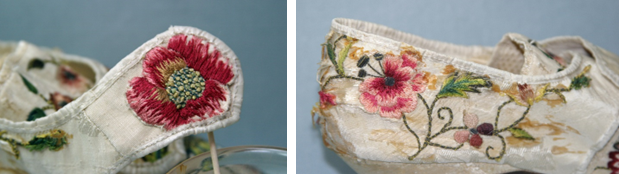
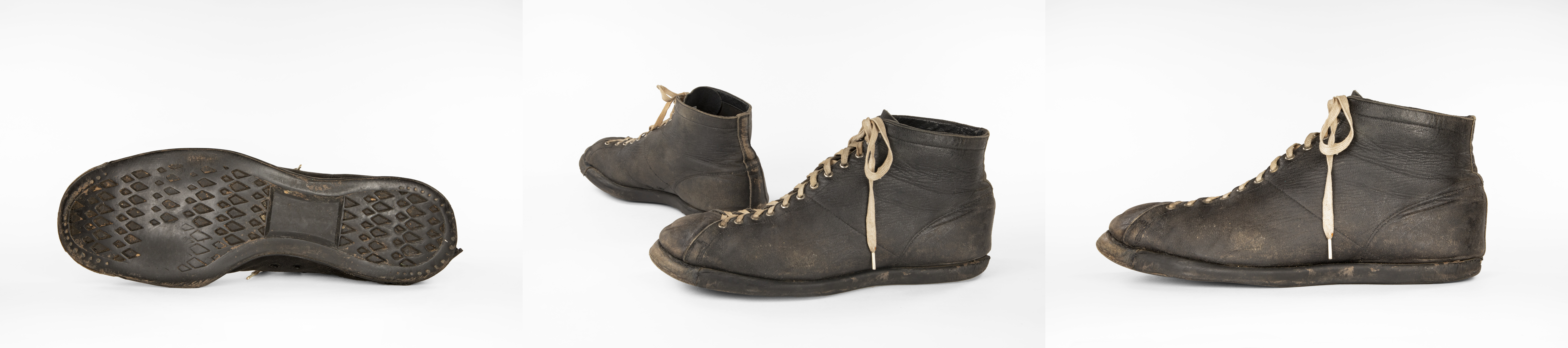
The main purpose of documentation photographs is, of course, to document: to record the important details and the unique or significant features of each artefact. With shoes, this usually includes capturing an overall shot of a single or pair of shoes, a profile shot, a sole shot, and often one or more close-up shot of details like embroidery, fine decorative elements, labels, and signs of wear.
Beyond just documenting, we are also trying to create compelling and aesthetically pleasing shots that are applicable for a variety of purposes. For the purpose of this project, we have had to find a balance between capturing each artefact as it is (unruly threads, lopsidedness, unsightly wear and all) and trying to capture them in their very best light. 

Aside from a short period of scanning archival material, lithographs, and other flat material— while our camera was sent out for repairs— most of our time has been spent photographing clogs and Chinese lotus, or bound-foot, shoes. What a contrast between the large, dark and rugged (often worm-holed) wooden clogs and the bright, tiny and dainty, intricately hand-stitched lotus shoes!


Sole shot of early 20th century Dutch clog, covered in woodworm holes. (BSM Image S85.0195)

When we were told we should start with the clog collection, I think we were both imagining working with identical hand-carved, clunky, unfinished wooden shoes. 

Unfinished clogs. What we were imagining most of the clogs in the collection would look like...   (BSM Image S85.01)

As we progressed, we came to appreciate “clogs” as a much broader and interesting category of footwear. We photographed clogs intricately carved with flora or portraits, massive leather bog boots, and clog roller skates! 

Not your average clog: beautifully carved wooden mule. (BSM Image S84.0194)

Working through the clog collection, we came to learn the fine art of positioning shoes. Pairs of shoes look really awkward when posed “unnaturally”— in a stance that a one would never take when actually wearing the shoes. It really helps to think about the personality of the kind of person who would have originally worn the shoes— the strong, wide stance that seemed appropriate for bog boots, for example, just wouldn’t work for posing Louboutain stilettos.


These tall leather bog boots have stiffened into this position – a ghostly trace of the man who once wore them.                 (BSM Image P97.0180)

Photographing the lotus shoes, we also had to be aware of capturing the complex stories recounted through the hand-embroidered characters, motifs and visual puns that decorate these shoes from toe to heel, to sole.


This lotus shoe from Shanghai feature a complex embroidered motif expressing a bride's desire for her husband's career success. (BSM Image P92.0055)

 It wasn’t difficult to appreciate these shoes as beautiful objects, with their bright colours, the incredibly fine stitch work, and striking sculptural form. Working so closely with the objects, it became more interesting to notice and capture signs of wear and tear. A surprising number of lotus shoes have visible dirt and mud caked into the soles, evidence that they were actually worn, walked, and even laboured in. 

Red silk wedding shoes with red soles showing caked dirt and signs of wear. (BSM Image P02.0019)

The Imaging Project, funded in part by the Young Canada Works program, has enabled us both to gain hands-on collections training and experience, as well as a rare opportunity to work intimately with hundreds objects from the Bata collection to (hopefully) capture the multi-faceted stories they tell. 

All images Copyright © 2012 Bata Shoe Museum, Toronto (Photos: Christine McLean and Nicole Dawkins)

Wednesday, August 1, 2012

Conservation Blog : A Slipper Fit for Cinderella


This bejeweled gold velvet mule with extended tongue/shin ornament was designed by Roger Vivier in 1964. It was recently purchased at auction by the Roger Vivier Archives in Paris, France and generously loaned for the entire run of the Bata Shoe Museum’s retrospective of the designer’s career Roger Vivier: From Process to Perfection.


Side view of damaged tongue
Close up of damaged tongue showing fraying edges of velvet & satin


Unfortunately the previous owner was unable to provide the tender-loving-care required for such a complicated object. Improper storage had rendered the fabric quite fragile and the unsupported tongue, which has some weight to it, had been pinned together in several places as the multiple layers had delaminated and the internal metal structure weakened.

Back of tongue showing location of pins

 Treatment here at the Bata Shoe Museum was as follows: the rusted pins were clipped with wire cutters and the shortened pieces were eased through the fabric with tweezers. The metal stays that wrapped around the perimeter of the tongue between the lining and the velvet were gently manipulated and glued into place as the original adhesive had long ago dried out.

Interfacing patch sewn together

Placement indicating future location of patch between velvet vamp and satin lining

 All the fraying threads along the edges of both the velvet and the satin lining were humidified and repositioned. The velvet at the base of the tongue was extremely fragile so a reinforcement was made from two layers of stiff interfacing sewn together. This patch was impregnated with an adhesive which upon drying was inserted between the upper and the vamp lining, and then the adhesive was solvent activated. Once all the weakened components were supported, the loose ‘jewels’ were sewn in place using fine silk thread and a long, very thin beading needle.

Access for all these operations was through the space between the tongue and its lining. Once everything was secured these 2 components were glued together. This treatment was so successful that the tongue could support itself which it couldn’t do when it arrived at the museum. A small acrylic rod rests between the back of the tongue and the sole to reduce the strain while the shoe is on display for the exhibition.

Front view of completed treatment

Back view of completed treatment

Wednesday, June 13, 2012

Plastics Blog - Chapter 3 - The Sincerest Form of Flattery: Leather and it's Lookalikes


By Samantha Conover
Proudly Plastic (1990s Patricia Cox Jelly Pumps) vs Plastic in Disguise (1980s faux leather Cougar boots)
There are times when designers want plastic to look like plastic. In modern shapes with bold colours, high glosses and transparent elements plastics will proudly proclaim their synthetic nature.  There are other times when designers seek to disguise plastic as a something else.

Through skillful manufacture, plastic can be made to look like many different natural materials. In the case of shoes, leather is the most desirable material for plastic to imitate. Faux leather is used primarily as a money saving measure, but is also prized for different physical properties (shine, durability) or because it is animal-friendly.

Early types of imitation leather were created by coating fabric with a mix of linseed oil and pigment and embossing it with a grained surface. In 1875 England, the original Leatherette was created for use in bookbinding. This material was similar to earlier imitation leathers, but used a thin layer of rubber instead of linseed oil.  

Modern methods of making imitation leather tend to follow the same basic formula of spreading a thin polymer layer over a fabric backing and embossing it with a grain. In the years after WWII, polyvinyl chloride (PVC) coated fabrics were developed. This material has good abrasion resistance but early versions tended to be stiff and un-breathable. The most famous PVC based faux leather is Naugahyde, invented by Uniroyal in the 1950s. Naugahyde is known for their surreal marketing campaign featuring the ugly-adorable Nauga, a mythical creature which happily sheds its vinyl skin for human use. As an aside, I realize this campaign must have inspired my dad who used to terrify my poor little sister with tales of the adorable fluffy Lycras that were killed so that she could wear her stretchy pants!


Naugahyde ad “The mythical Nauga” 

This Bata prototype from 1967 features a PVC based imitation leather paired with a molded PVC sole and heel.
          
In 1964 DuPont introduced the world to Corfam with an enthusiastic song and dance number in their pavilion at the World’s Fair in New York. They claimed this miraculous new material was no mere imitation. Corfam was an improvement on nature and one more point of progress on the modern trend of manmade miracles! Corfam was the first “poromeric” material, a term used to describe a microporous and permeable material composed of a thin polyurethane layer over a fabric backing (in the case of Corfam, the backing was polyester). This new material was supposed to be breathable, comfortable, water-repellant and less expensive than leather. 

Corfam was initially proclaimed a huge success after wear-tests by a sample of nursing staff. Unfortunately, it was later revealed that many negative responses were disregarded as “fit failure,” in other words; the nurses selected the wrong size shoes. In fact, these nurses simply chose a size that was slightly snug, expecting the shoe to stretch and conform to the foot like leather.  This lack of pliability, along with high costs (Corfam ended up being more expensive than leather) and low breathability (complaints of terrible sweating and blisters were common) resulted in a consumer rejection of this miracle material. Later types poromeric polyurethane based faux leather were more successful , but some people are still wary of imitation leather.

Corfam Ad  from 1966

"It's that pleasure you'll treasure when you wear Corfam shoes!"


Plastics have also been used in order to give different effects to leather and synthetic materials. In the late 1800s a mixture of cellulose nitrate, pigment and castor oil over a textile backing was often used to create a patent leather effect. Modern patent leather effects are created by laying a thin layer of polyurethane over a leather base.

“The shine of these sophisticated Givenchy patent shoes is achieved through the wonders of plastic”

In the late 1960s a “wet look” or “crinkled patent” effect was achieve by the development of micrometer thin polyurethane coatings.  This sexy, futuristic effect was a perfect compliment to mod style.  Sadly, this look doesn’t last long. The thin coatings of polyurethane can become brittle with age which leads to crumbling and cracking


“The wet look material of this Herbert Levine boot(above) is still sleek and sophisticated while the stresses from the embroidery have caused this Lady Diane boot(below)  to crack”

The quest for an inexpensive, comfortable and durable synthetic leather is still on. Most recent advances are in the development of micro-denier fibres which produce a more leather-like material.  Interesting information about the development synthetic leathers and other uses for plastics in shoe manufactures can be found in this article from Satra, a leading research and technology center http://www.satra.co.uk/bulletin/article_view.php?id=297 .

Watch the video below from the 1964 DuPont World's Fair video, which has the Corfam song in it!